

)
Trump and Xi Hold Summit in Beijing: Temple of Heaven Visit, Trade Talks, and Taiwan Tensions
US President Donald Trump and Chinese President Xi Jinping met in Beijing on May 14, 2026, for a high-stakes superpower summit aimed at addressing trade disputes, regional security, and global stability. The two leaders engaged in a series of events, including a formal welcome ceremony at the Great Hall of the People, bilateral talks, a state banquet, and a joint visit to the historic Temple of Heaven.
Arriving on Air Force One late Wednesday, Trump was accompanied by a high-profile delegation of business leaders, including Nvidia CEO Jensen Huang, Tesla CEO Elon Musk, Apple CEO Tim Cook, BlackRock CEO Larry Fink, and Meta president Dina Powell McCormick. Also present were Secretary of State Marco Rubio, Defense Secretary Pete Hegseth, and senior advisor Steven Miller. Trump’s son Eric Trump and his wife Lara also joined the entourage.
Pomp and Ceremony at the Great Hall of the People
The summit kicked off with a grand welcome ceremony at the Great Hall of the People, where Xi greeted Trump on a red carpet lined with uniformed soldiers and schoolchildren waving Chinese and American flags. The two leaders stood for national anthems and inspected an honor guard before entering the hall for bilateral talks. During the meeting, Xi welcomed Trump back to China after nine years, stating that “the whole world is watching this meeting today.” He emphasized that China and the US should be “partners, not rivals” and highlighted the need for cooperation to address global challenges.
Trump responded with effusive praise, calling Xi “a great leader” and noting that it was “an honor to be your friend.” He expressed confidence that the two countries would have “a fantastic future together” and that the relationship would be “better than ever before.”
Trade and Economic Wins
One of the key outcomes of the summit was China’s decision to renew export licenses for more than 400 US beef processing plants. These licenses had lapsed over the past year without customary renewal, affecting roughly 65% of previously registered facilities. The move was widely seen as a goodwill gesture ahead of the summit. Xi noted that trade officials from both countries had achieved “generally balanced and positive outcomes” during preliminary talks in South Korea, and he reiterated that “there are no winners in a trade war.”
Trump’s delegation of CEOs was described by the president as coming to “pay respects” and expand business ties. Musk and Huang said the meetings went “wonderful” and that “many good things” were achieved. Xi told the business leaders that China would “open wider” to the world, promising “even brighter prospects” for American companies.
Taiwan and Strategic Red Lines
A major point of contention was Taiwan. Xi warned Trump that the Taiwan question is “the most important issue in China-US relations” and that if mishandled, the two countries “could come into conflict.” He stressed that proper handling of Taiwan would allow overall stability, while mishandling could push the entire relationship into a dangerous situation. Trump did not publicly respond to this warning, but Taiwan’s foreign ministry later stated that the US had “reaffirmed its clear and firm support” for the island.
Beijing had drawn four “red lines” for Trump’s visit, which included non-interference in Taiwan, Xinjiang, Tibet, and Hong Kong. Trump also mentioned Hong Kong media tycoon Jimmy Lai, who is imprisoned in the city, but his comments were ambiguous.
Temple of Heaven Visit
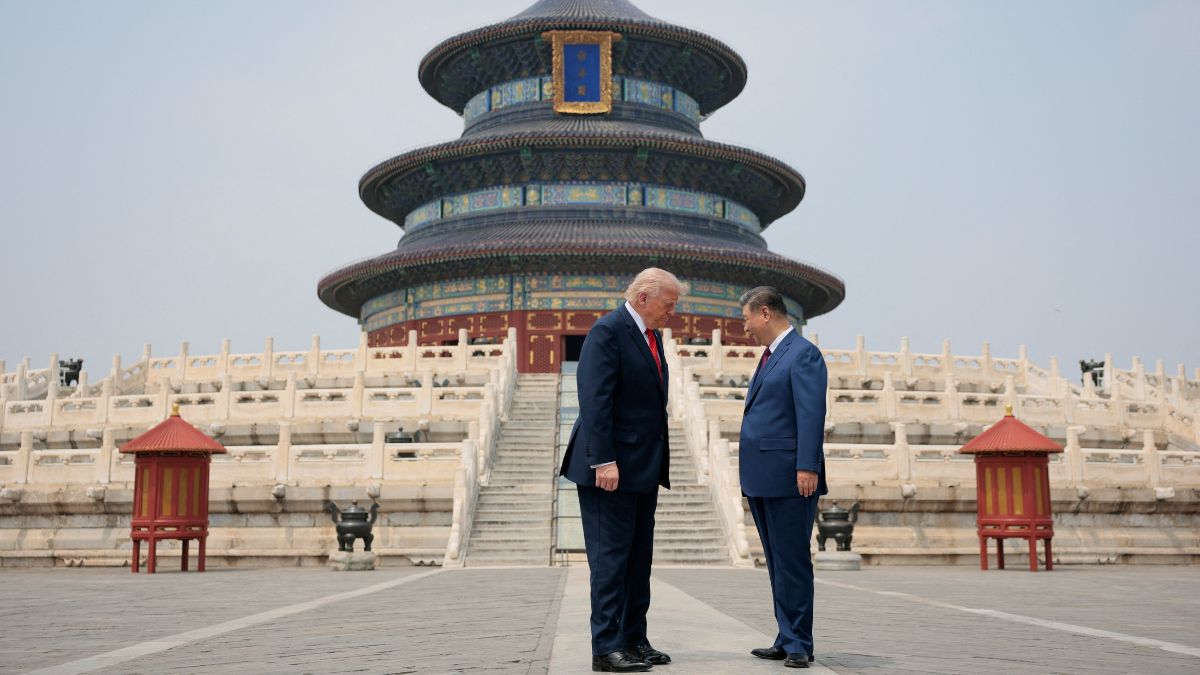
Following the bilateral talks, Trump and Xi toured the Temple of Heaven, a UNESCO World Heritage Site dating from the early 15th century. The site was historically used by Chinese emperors for annual ceremonies praying for good harvests. Trump is only the second sitting US president to visit, after Gerald Ford in 1975. During the tour, photographers captured images of the leaders walking together, as well as Eric and Lara Trump posing with Xi. Xi was seen whispering to Trump, and the atmosphere appeared cordial despite underlying tensions.
Nuclear Arms and Iran
Trump also pitched a proposal for a trilateral nuclear arms agreement among the US, China, and Russia to cap the number of nuclear weapons in each arsenal. A senior administration official briefed reporters that Trump favors a “new, improved and modernized” agreement that includes China, after the New START Treaty expired in February 2026. The Iran war was also on the agenda, though details of the discussion were not immediately released.
Expert Analysis: Trump’s Weak Hand
Geopolitical experts noted that Trump arrived in Beijing with little leverage. Prof. Sriparna Pathak argued that Trump’s behavior suggests he has accepted defeat in his China strategy and is now seeking accommodation with China. She pointed to the dismantling of alliances like the Quad and Aukus, leaving the US weaker. “He had all the cards when he assumed office but has none today,” she said. Another analyst from Beijing Orient Agribusiness Consultants described the beef license renewal as a goodwill gesture in areas not critical to US-China trade.
Looking Ahead
The summit continues on Friday with a “friendship photo,” bilateral tea, and a lunch between the two leaders. The full schedule also includes a state banquet on Thursday evening. The outcome of the closed-door meeting has not been fully disclosed, but both sides expressed optimism. Xi said he hoped 2026 would become “a historic, landmark year” for China-US relations.
The visit comes amid a turbulent global landscape, including the ongoing war in West Asia and rising tensions in the South China Sea. While the summit provided moments of warmth and symbolism, the substantive disagreements on trade, technology, and territorial sovereignty remain deep. Whether the “fantastic future” Trump envisions can be realized will depend on whether both sides can translate rhetorical cooperation into concrete action.
Source: Firstpost News