

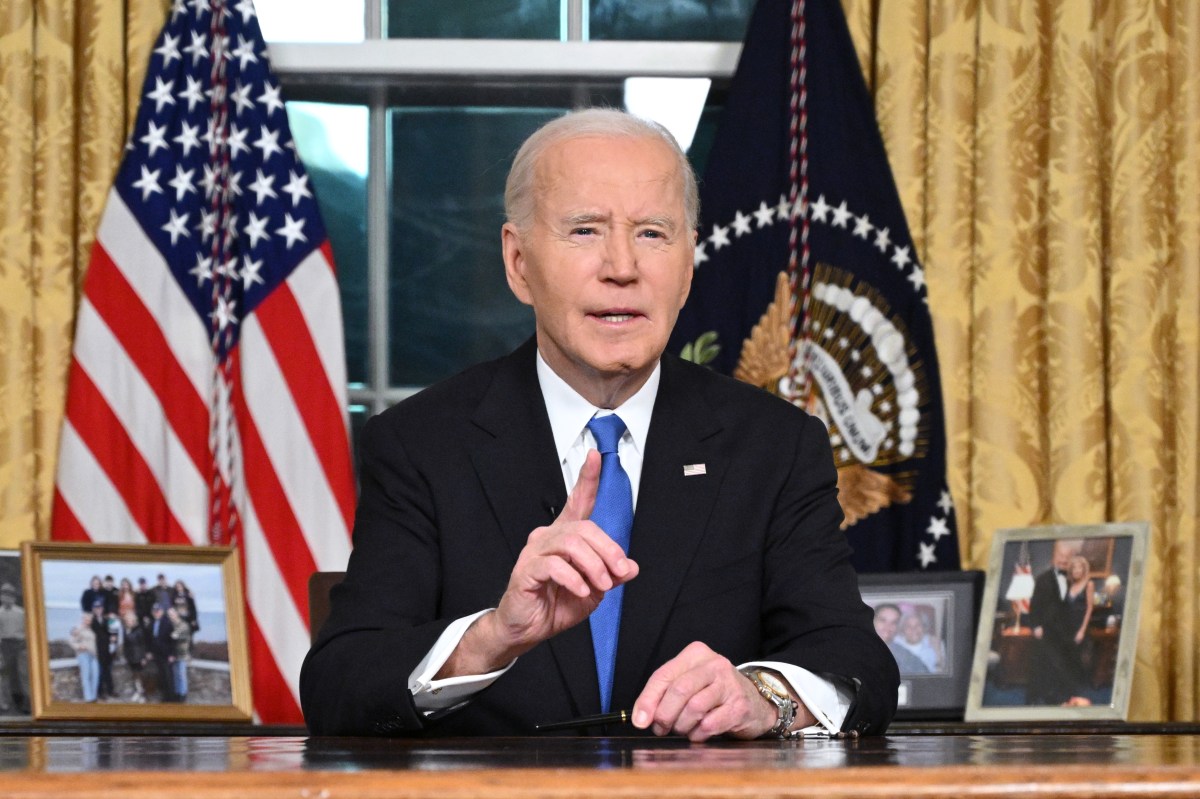
The baby name “Joe” is on the verge of dropping out of the U.S. top 1,000 for the first time since records began, according to new data from the Social Security Administration. The name has fallen lower than any presidential first name before disappearing from the rankings, prompting questions about whether political exposure can affect naming trends.
Although President Joe Biden was born Joseph—a name that remains far more popular—the shorter form “Joe” has seen a steep decline in recent years. The name ranked 994 in 2025, down sharply from 728 in 2020, the year Biden was elected president. That slide has taken “Joe” closer to the cutoff than other presidential names. “Donald,” for example, has also declined in recent years but remains significantly higher in the rankings, at 690 in 2025, despite similar levels of political visibility.
A Long Slide for 'Joe'
The latest Social Security Administration figures show "Joe" steadily lost popularity throughout Biden's presidency. After placing 728th in 2020, the name fell to 794 in 2021, then dropped further to 896 in 2022 and 909 in 2023. There was a brief rebound to 884 in 2024 before the name slipped again to 994 in 2025, putting it close to disappearing from the top 1,000 names altogether.
The decline of "Joe" coincided with a difficult approval-rating trajectory for Biden during his four years in office. According to Gallup, he entered the White House in January 2021 with a 57 percent approval rating, but saw that figure fall into the low 40s and high 30s for much of his presidency. His average approval rating of 42.2 percent ranks among the lowest for a post-World War II president.
Still, naming experts caution against drawing a direct line between presidential popularity and naming trends. Kaomi Joy Taylor, founder, director, and "chief namiac" at the Museum of Names, told Newsweek that cultural shifts are likely a more significant factor. "We're in the midst of a large societal shift towards creative naming," Taylor said. "Names can decline due to negative stigma, whether associated with a polarizing figure, an older generation or social group, or a negative meme or stereotype. But that often coincides with telltale signs, like the name being used as a slur against all members of a certain social group and/or shaming of people who hold that name. Those don't seem to be widespread here."
Taylor added that traditional names can naturally fall out of fashion over time as parents look for newer options. "All names move through cycles of popularity and the time for Joseph, like Edna and Millard and Harvey, is waning - at least for now."
Presidential Names Often Rise—and Fall
Historical data suggest presidential names do not necessarily gain in popularity during time in office. The name “Donald” has followed a similar downward path to "Joe," declining steadily from a mid-20th-century peak despite the heightened visibility of Donald Trump’s presidency. After ranking 440th in 2015, the name slipped to 489 in 2016 and has continued to fall, reaching 690 in 2025.
“Carter” appears to have stalled and declined during Jimmy Carter’s presidency in the late 1970s (he, like Biden, suffered low approval ratings and only served one term) before recovering in later decades. "Dwight" ranked 122nd in 1953 at the beginning of Dwight D. Eisenhower's presidency. The name steadily declined afterward and eventually fell out of the top 1,000 entirely by the late 20th century. Its final ranking appearance came in 1989 at 895.
"Lyndon," tied to Lyndon B. Johnson, experienced a noticeable surge during the 1960s. In 1964, the year after Johnson was inaugurated following the assassination of John F. Kennedy, the name climbed to 346 from 595. But the increase proved short-lived. By the final year of Johnson’s presidency, "Lyndon" had dropped to 819 before disappearing from the rankings altogether by the late 1970s or early 1980s.
The same pattern appeared earlier with "Woodrow," of Woodrow Wilson. Before Wilson’s presidency, the name ranked 234th in 1911, but during his time in office it climbed as high as 44th. Historically, some parents have opted to name their children using the last name of a president. Herbert Hoover is one such case, who was in the White House from 1929 to 1933. "Hoover" emerged on the name ranking list for the first time in 1928, the year of his election. But much like his presidency, popularity dwindled over time, dropping from 363 in the list to 794 in 1933, before dropping off altogether. Hoover left office with one of the lowest approval ratings in U.S. history due to his botched handling of the Great Depression.
Broader Cultural Trends
Experts emphasize that naming choices are influenced by a complex interplay of factors, including pop culture, generational shifts, and the desire for uniqueness. The decline of "Joe" may be part of a larger movement away from traditional, short male names in favor of more creative or gender-neutral options. Names like "Liam," "Noah," and "Oliver" have dominated the top spots in recent years, reflecting a preference for softer sounds and longer syllables.
The phenomenon is not limited to the United States. In the United Kingdom, for example, names such as "Gary" and "Keith" have also seen sharp declines, often associated with older generations. Similarly, "Joe" may be perceived as an aging name, lacking the modern appeal that parents seek.
Social media and celebrity influence also play a role. For instance, the name "Kylie" surged in popularity following the rise of Kylie Jenner, while "Beyoncé" remains rare but recognizable. Conversely, names associated with controversial figures can suffer. However, the case of "Joe" is nuanced: while it is the president's nickname, his formal name "Joseph" remains in the top 100, indicating that the decline is specific to the diminutive form.
The Social Security Administration's data tracks names given to at least five babies in a year, and the top 1,000 cutoff has become lower over time as more unique names are chosen. In 2025, the threshold for entering the top 1,000 may be just a few hundred births, making "Joe" vulnerable. According to the SSA, only about 200 baby boys were named Joe in 2025, compared to over 1,000 in the 1970s.
Some observers speculate that the polarizing nature of modern politics may accelerate the decline of names associated with sitting presidents. Unlike earlier eras when presidents were often revered as unifiers, today's political figures are frequently divisive, potentially deterring parents from using their names. However, the data on "Donald" shows that its decline began before Trump's presidency and has continued at a steady pace, suggesting that other factors are at play.
What the Future Holds for 'Joe'
If "Joe" falls out of the top 1,000, it would join a list of formerly popular names that have disappeared from the rankings, such as "Gary," "Larry," and "Bruce." While some names do make comebacks—like "Maeve" and "Atticus"—they often require a generation gap or a strong cultural revival. For "Joe" to rebound, it would likely need positive associations in media or a shift in fashion toward retro names.
Name expert Taylor notes that "Joseph" remains strong, so parents who admire the president might choose the longer form instead. "Joe" as a standalone name may continue its decline, but it's unlikely to vanish entirely; it will remain in use as a nickname and among families with personal connections.
Ultimately, the story of "Joe" reflects larger societal changes in how we name our children. The move toward individuality and creativity shows no signs of reversing, and traditional names like "Joe" may become increasingly rare. Whether this trend is directly tied to presidential approval ratings or simply generational evolution, the data offers a fascinating lens through which to view American culture and politics.
Source: Newsweek News