

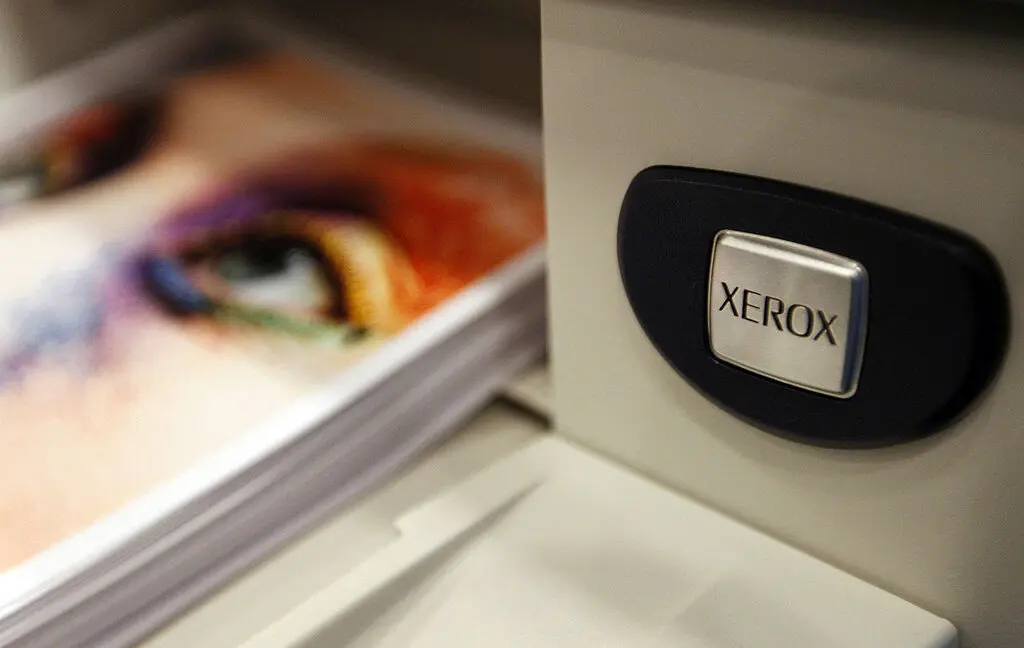
In a case that underscores the creativity of drug traffickers, four Australian men attempted to smuggle 22.4 kilograms (49.4 pounds) of cocaine into the country by concealing the narcotics inside Xerox printers. The plot, which unfolded in 2017, resulted in the sentencing of three men this year, the Australian Federal Police (AFP) and Australian Border Force (ABF) announced recently.
The printers were shipped as part of a legitimate cargo to a factory in Airport West, Victoria. However, the ABF discovered the contraband after scanning the package in Melbourne on April 30, 2017. Inside the paper trays, officers found 10 packages of a compressed white powder that tested positive for cocaine. The drugs were removed and replaced with a harmless alternative before the printers were delivered to their intended destination, where tracking devices had been installed.
Details of the Sentencing
One of the men was sentenced this month to nine years in prison with a non-parole period of four and a half years. Two others had been sentenced earlier: one in 2022 to 10 years with a non-parole period of six and a half years, and one in 2025 to 10 years with a non-parole period of five and a half years. A fourth man was acquitted. The street value of the cocaine was estimated at between 9.3 million and 12.4 million Australian dollars ($6.7 million to $9 million).
Printers as a Smuggling Tool
This is not the first time that printers have been used to smuggle illicit substances. In 2019, Indian authorities arrested two men after discovering 422 grams of cocaine hidden inside printers arriving from Canada. In 2024, a man in London received a 31-year sentence for importing cocaine worth £132 million using printer toner cartridges. And in 2014, Australian authorities charged a woman for smuggling methamphetamine using laser printer cartridges that contained white powder residue.
The methods have evolved with technology. In 2022, Australian police arrested two men who attempted to smuggle 30 kilograms of methamphetamine using 3D printers. The AFP noted at the time that the syndicate behind the plot was suspected of importing up to 100 kilograms at a time and had been operating for some time before being caught.
Inside the Investigation
The investigation into the Xerox printers was a multi-agency effort involving the AFP and the ABF. After intercepting the drugs, authorities replaced them with an inert substance and allowed the shipment to continue. When the men arrived to retrieve the printers, they were arrested. The case highlighted sophisticated methods used by organized crime groups to exploit commercial shipping channels.
The AFP's acting commander, Simone Butcher, emphasized the determination of law enforcement to disrupt these networks. The use of everyday objects like printers allows traffickers to hide drugs in plain sight, but customs technologies and forensic testing often reveal the deception. The forensic analysis of the powder, though presumptive, was sufficient to initiate the seizure and subsequent prosecution.
Broader Context of Australian Drug Smuggling
Australia has some of the world's strictest border control measures, yet drug smuggling remains a persistent challenge. According to the Australian Institute of Criminology, the country is a lucrative market for illicit drugs, with cocaine use rates among the highest in the world. Smugglers continuously adapt their methods, using everything from inside mail parcels to concealed compartments in vehicles and aircraft. The use of printers, as in this case, is a relatively recent phenomenon but one that has been repeated multiple times across different jurisdictions.
The Australian Border Force has invested heavily in scanning technology capable of detecting anomalies in density and composition, which allows officers to identify hidden substances even within complex machinery. In the case of the Xerox printers, the packages of cocaine were carefully fitted into the paper trays, but the X-ray images revealed irregularities that prompted further inspection.
Drug trafficking organizations often recruit individuals to act as recipients, offering financial incentives or exploiting vulnerable people. The four men involved in this plot were all Australian citizens, highlighting that domestic involvement is common in smuggling rings. The acquittal of one defendant suggests that the evidence against him was insufficient to prove knowledge or intent, a common challenge in such cases.
Impact on Public Safety
The cocaine smuggled in this plot could have caused significant harm. Cocaine is a stimulant drug that can lead to addiction, cardiovascular problems, and mental health issues. The Australian Crime Commission (now part of the Australian Criminal Intelligence Commission) has consistently warned about the devastating effects of cocaine on communities, including increased violence, property crime, and overdose deaths. By intercepting 22.4 kilograms, authorities prevented the distribution of tens of thousands of doses.
The sentencing of the three men sends a strong message about the consequences of drug trafficking. Under Australian law, attempting to possess a commercial quantity of a border-controlled drug carries heavy penalties, including life imprisonment. The non-parole periods mean that even if the men are released, they will face stringent supervision and restrictions.
Future Challenges for Law Enforcement
As technology advances, so do smuggling techniques. Criminals are now using 3D printers to create custom compartments, and even drones are being employed to drop drugs into remote areas. The AFP collaborates with international partners like INTERPOL and the World Customs Organization to share intelligence and track emerging trends. The case of the Xerox printers, which began in 2017 and concluded with sentences in 2022 and 2025, demonstrates the lengthy timelines involved in bringing traffickers to justice.
The acquittal of one defendant also highlights the importance of building solid cases based on evidence of intent. In many drug smuggling cases, the defense argues that the defendant was unwittingly involved, unaware of the hidden cargo. Prosecutors must prove beyond a reasonable doubt that each individual knew about the drugs and intended to possess them.
The AFP continues to urge the public to report suspicious activity related to drug trafficking. Anonymous reports can be made through Crime Stoppers, and law enforcement regularly provides training to freight companies and postal services on how to identify suspicious packages. The use of tracking devices and controlled deliveries remains a key tactic in dismantling trafficking networks.
In summary, the case of the Xerox printers is a reminder of the lengths to which organized crime will go to exploit loopholes, but also of the determination of authorities to protect the community. The sentences imposed are a direct result of meticulous police work that began with a simple inspection of a shipping container.
Source: Ars Technica News