

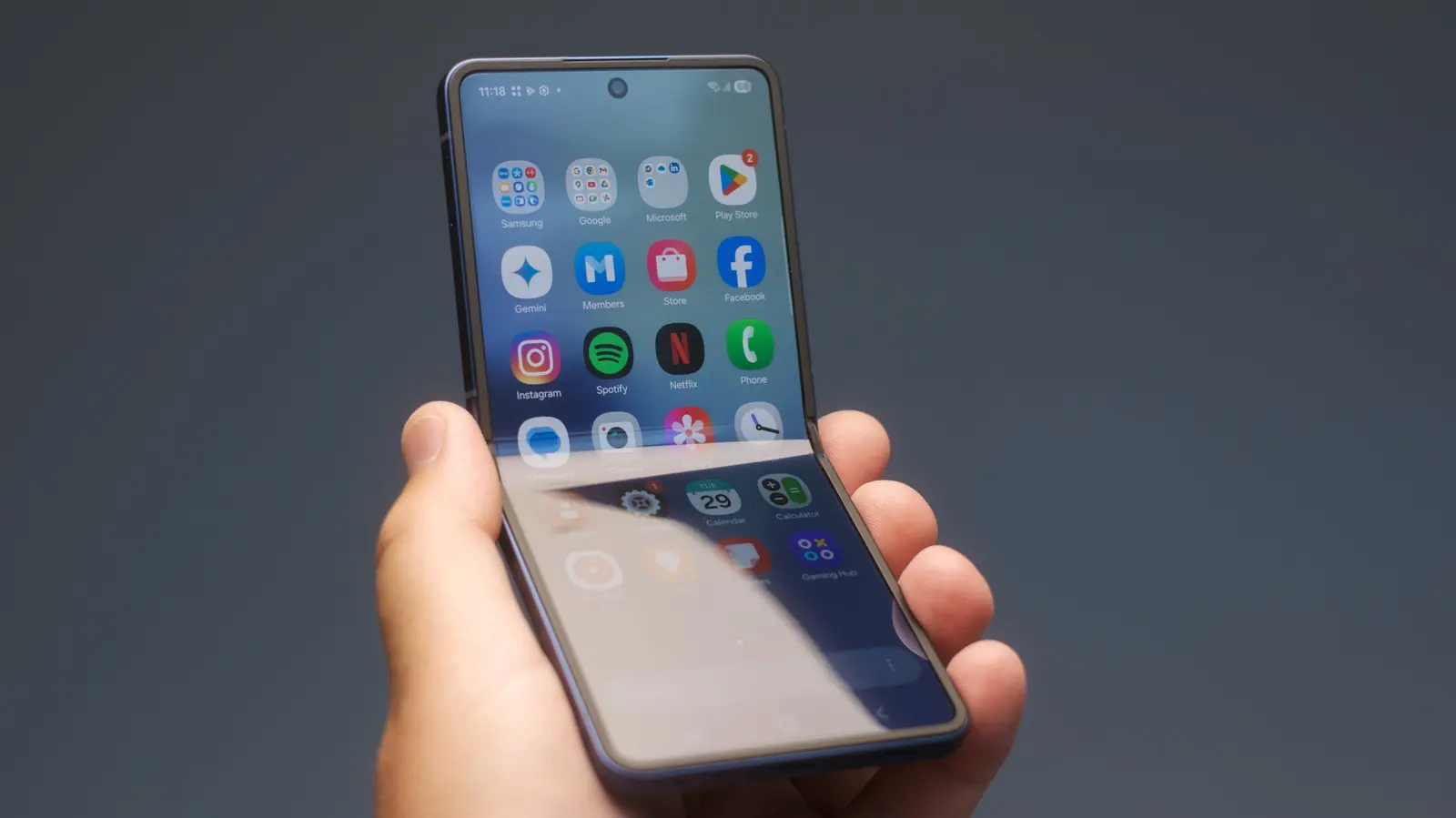
Display technology has undergone a remarkable transformation over the past several decades. From the bulky cathode-ray tubes that dominated living rooms in the mid-20th century to the slim liquid crystal displays (LCDs) that became ubiquitous in laptops and televisions, each generation has brought improvements in thinness, weight, and power efficiency. The current state of the art, organic light-emitting diode (OLED) displays, offers stunning contrast, vibrant colors, and even the ability to bend in some degree. However, the dream of truly flexible and stretchable displays—ones that could be integrated into clothing, medical patches, or rollable screens—has remained elusive because OLEDs are inherently fragile. Repeated bending and stretching cause micro-fractures in the conductive traces and organic layers, leading to visible damage and reduced image quality. Now, a collaboration between South Korean researchers and scientists at Drexel University in Philadelphia has yielded a new type of OLED display that can bend, fold, and stretch without a single crease, potentially overcoming the key limitations that have hindered the adoption of flexible displays in wearables and other applications.
The Challenge of Flexible Displays
Flexible OLED displays have been commercially available for more than a decade, most notably in foldable smartphones from manufacturers like Samsung, Huawei, and others. While these devices represent a significant engineering achievement, they are not without serious drawbacks. One of the major issues is durability: after repeated folding and unfolding, micro-fractures develop in the conductive traces that carry electrical signals across the panel. These fractures gradually degrade the organic layers of the OLED substrate, manifesting as visible lines, dead pixels, or reduced brightness. Moreover, the polymers added to make the display flexible often decrease the overall brightness and energy efficiency, forcing manufacturers to increase power consumption to compensate. For wearables, which require displays to stretch and conform to curved surfaces (like the human wrist or joints), these problems are even more pronounced. The current generation of flexible OLEDs simply cannot withstand the repeated stretching and folding cycles that a wearable device would encounter in daily use. This has limited the practical deployment of foldable screens in truly portable and resilient products.
Nanotechnology Breakthrough with MXene
The new flexible OLED design overcomes these shortcomings by leveraging a class of nanomaterials called MXenes. Discovered and developed by researchers at Drexel University's College of Engineering in 2011, MXenes are two-dimensional transition metal carbides, nitrides, or carbonitrides that combine excellent electrical conductivity with remarkable mechanical strength, transparency, and stretchability. In the context of displays, MXenes can be used to create transparent electrodes that are both highly conductive and flexible, replacing the brittle indium tin oxide (ITO) that is commonly used in conventional OLEDs. The MXene-based electrodes can stretch up to 1.6 times their original size without cracking, and they maintain their conductivity even under significant strain. This allows the new OLED display to be safely stretched to 1.6 times its original dimensions, a feat that would shatter a traditional flexible display. After 100 cycles of stretching at 2% strain—a demanding test simulating repeated use—the display retains 83% of its light output, a dramatic improvement over existing stretchable displays, which often lose more than half their brightness after just a few cycles. According to the researchers, the display retains almost 90% of its performance and efficiency when stretched up to 60% of its maximum strain limit, suggesting a robust design that could endure the rigors of daily use in wearable technology.
Improving Light Efficiency with ExciPh
While the MXene electrodes provide the necessary structural resilience, a separate innovation addresses the efficiency of light generation within the OLED itself. Conventional OLEDs produce light through the recombination of positive and negative charges (holes and electrons) in the organic layer, forming excitons—bound pairs of electrons and holes. The decay of these excitons emits light. However, in typical flexible OLEDs, only 12% to 22% of excitons successfully produce light; the rest lose their energy as heat or non-radiative processes, leading to low efficiency and dimmer displays. To tackle this, the research team developed a new stretchable organic layer called an exciplex-assisted phosphorescent (ExciPh) layer. This layer modifies the energy levels within the OLED system to funnel more excitons into a radiative decay pathway. By using a combination of organic materials that form an exciplex (a short-lived charge-transfer complex) and a phosphorescent dopant, the ExciPh layer allows more than 57% of excitons to produce light—nearly three times the efficiency of traditional flexible OLEDs. This breakthrough not only makes the display significantly brighter but also reduces the power required to achieve a given brightness, which is critical for battery-powered wearables. The improved efficiency also means less heat generation, which can prolong the lifetime of the organic materials and the overall display.
From Lab to Consumer Reality
While many promising technologies published in academic journals never make the leap from the laboratory to commercial products, this joint US–Korean research effort has produced working prototypes that offer a tangible glimpse of the future. Drexel University researchers demonstrated the efficacy of their stretchable OLED display technology with two green monochrome displays: one depicting a heart icon, and another showing a set of numbers. These simple demonstrations proved that the display could be stretched, folded, and bent repeatedly without loss of image integrity. Meanwhile, their counterparts at Seoul National University took the technology a step further by developing a full-color stretchable display, complete with stretchable passive-matrix OLEDs. This indicates that the new design is not limited to simple monochrome applications but can be scaled to produce vibrant, full-color images suitable for consumer electronics. The authors of the research, published in the journal Nature, list real-time health care monitoring and wearable communications technology as the primary potential applications. A stretchable display could be integrated into a smart bandage that changes color to indicate wound infection, or into a smartwatch strap that displays notifications without requiring a rigid screen. The recent progress in stretchable batteries, as discussed in ACS Energy Letters, further suggests that the necessary power sources are also being developed in parallel. With both the display and the battery becoming flexible, the vision of truly wearable, seamlessly integrated electronics may soon become a reality rather than science fiction.
The combination of MXene electrodes and ExciPh layers addresses two fundamental barriers that have held back flexible OLED technology: mechanical durability and optical efficiency. The result is a display that can endure repeated stretching and folding while maintaining high brightness and low power consumption. As the research community continues to refine the manufacturing processes and scale up production, these cutting-edge OLEDs may soon find their way into a new generation of devices, from foldable tablets and rollable televisions to smart clothing and medical implants. The era of displays that can bend, fold, and stretch without a single crease is now closer than ever.
Source: SlashGear News