

Introduction
Shortwave radio has always had a reputation for being the wild frontier of the airwaves. While AM and FM stations serve local audiences, shortwave can bounce signals across continents, allowing anyone with a receiver to pick up transmissions from thousands of miles away. Among the usual broadcasts—news, weather, and time signals—lurk some genuinely strange and unexplained signals. The most infamous of these is UVB-76, also known as the Russian Buzzer, a station that has been transmitting a monotonous buzzing sound for decades. But there are many more: number stations reading lists of numbers in calm voices, military networks using cryptic phrases, and odd tones that defy simple explanation. Thanks to online software-defined radio (SDR) receivers, you don’t need expensive equipment to hear these signals yourself. You can jump on a website, tune a virtual dial, and start listening to the weirdest sounds on the planet.
What Makes Shortwave Different?
Most consumer radio operates in the VHF and UHF bands, where signals travel in straight lines and are limited by the horizon. Shortwave, on the other hand, uses the high-frequency (HF) range between 3 and 30 MHz. At these frequencies, radio waves can refract off the ionosphere and return to Earth hundreds or even thousands of miles away. This phenomenon, known as skywave propagation, allows a signal from a transmitter in Russia to be heard clearly in North America or Australia. The ionosphere’s behavior changes with time of day, season, and solar activity, so listening conditions vary. Nighttime is often best for long-distance reception because the lower ionospheric layers become more reflective. This is why many mysterious stations schedule their transmissions during darkness. Online SDR receivers, which are physical radios connected to the internet, let you tune into bands from anywhere. Websites like WebSDR, KiwiSDR, and OpenWebRX aggregate these receivers, giving you a global listening post at your fingertips.
The Most Famous Mystery: UVB-76 (The Buzzer)
The most iconic weird signal is UVB-76, commonly called the Russian Buzzer. Tune to 4625 kHz in upper sideband (USB) mode, and you will hear a short, repeating buzz roughly 25 times per minute. It’s mind-numbingly repetitive, but that’s exactly what makes it so unsettling. The station has been broadcasting from various locations in Russia since at least the 1970s. Its purpose is unknown, but it is widely believed to be a military communications channel, possibly part of a system called the “Dead Hand” or a relay for orders to strategic forces. Occasionally, the buzzing stops and a voice recites call signs or numbers in Russian. One famous incident occurred in 2014 when the station played a snippet of Tchaikovsky’s Swan Lake, sparking doomsday theories. Over the years, the station has changed callsigns—from Zhukovsky to others—and moved transmission sites, but the buzz remains. Despite its notoriety, many online SDRs near its suspected location have blocked the frequency to prevent abuse by so-called “radio graffiti” artists. Still, listeners in other parts of the world can often pick it up.
A Brief History of the Buzzer
The Buzzer has been tracked by hobbyists since the Cold War. Its earliest known callsign was UVC or UVB-76, and it was originally located near Pskov, close to the Estonian border. In 2010, the station relocated to a site near St. Petersburg. The buzzing sound itself is believed to be a carrier marker, ensuring the frequency remains active. When a voice message is transmitted, it often consists of phonetic names like “Romani, Lidiya” followed by numbers. The meaning is unknown. The station’s association with the Dead Hand—a speculated automatic nuclear retaliation system—is pure folklore, but it adds to the mystique. More practically, the station may be part of the Russian Aerospace Forces’ communication network.
Number Stations: Spy Radio at Its Creepiest
If the Buzzer is strange, number stations are downright chilling. These are shortwave stations that broadcast sequences of numbers, usually read by a synthetic or human voice in a calm, monotonous tone. The numbers are grouped into strings like “12345 67890” or occasionally paired with letters. They are widely believed to be one-way transmissions to intelligence operatives, using one-time pads for encryption. The Conet Project, a famous collection of recordings, documents dozens of such stations. The most active include HM01 (Cuban numbers) and E11 (Oblique). HM01, thought to be operated by Cuban intelligence, transmits on frequencies like 9330 kHz in AM mode, mixing Spanish voice groups with digital bursts. E11 is an English-language station that uses a woman’s voice reading numbers on a schedule that changes daily. These stations have been broadcasting for decades, and their continued operation hints at a hidden world of espionage that never fully ended.
Popular Number Stations to Listen For
Here are some of the most commonly heard number stations and their frequencies. All times are in UTC, and reception depends on propagation.
| Station | Frequency | Mode | Schedule/Notes |
|---|---|---|---|
| HM01 | 9330, 10345, 11435, 11530 kHz | AM (voice + data) | Active most evenings; Spanish female voice |
| E11 (Oblique) | Varies by day (e.g., 8102 kHz Mon-Wed) | USB | English female voice; schedule rotates weekly |
| The Pip | 5448 kHz (day), 3756 kHz (night) | USB | Repeating pip tone, occasional Russian voice |
| The Squeaky Wheel | 5367 kHz (day), 3363.5 kHz (night) | USB | Two-tone squeak, sometimes with voice |
| UVB-76 (Buzzer) | 4625 kHz | USB | Continuous buzz, rare voice breaks |
Military and Utility Signals
Not all weird shortwave signals are mysterious. Many belong to military or utility networks that sound strange to the uninitiated. The US High Frequency Global Communications System (HFGCS) broadcasts routine messages using the phrase “Skyking, do not answer,” which became famous in internet lore. These are high-priority encoded messages for aircraft and ground stations. The network operates on 4724, 8992, 11175, and 15016 kHz. More mundane but still interesting are time signal stations like WWV (US) and CHU (Canada), which broadcast the time in spoken form and with ticks. These are reliable beacons for testing reception. For hobbyists, these utility signals serve as training wheels for learning the radio spectrum. Once you recognize the rhythm of a military test count or a time station, the truly anomalous signals—like a sudden voice on a normally silent Buzzer—stand out immediately.
How to Listen Yourself
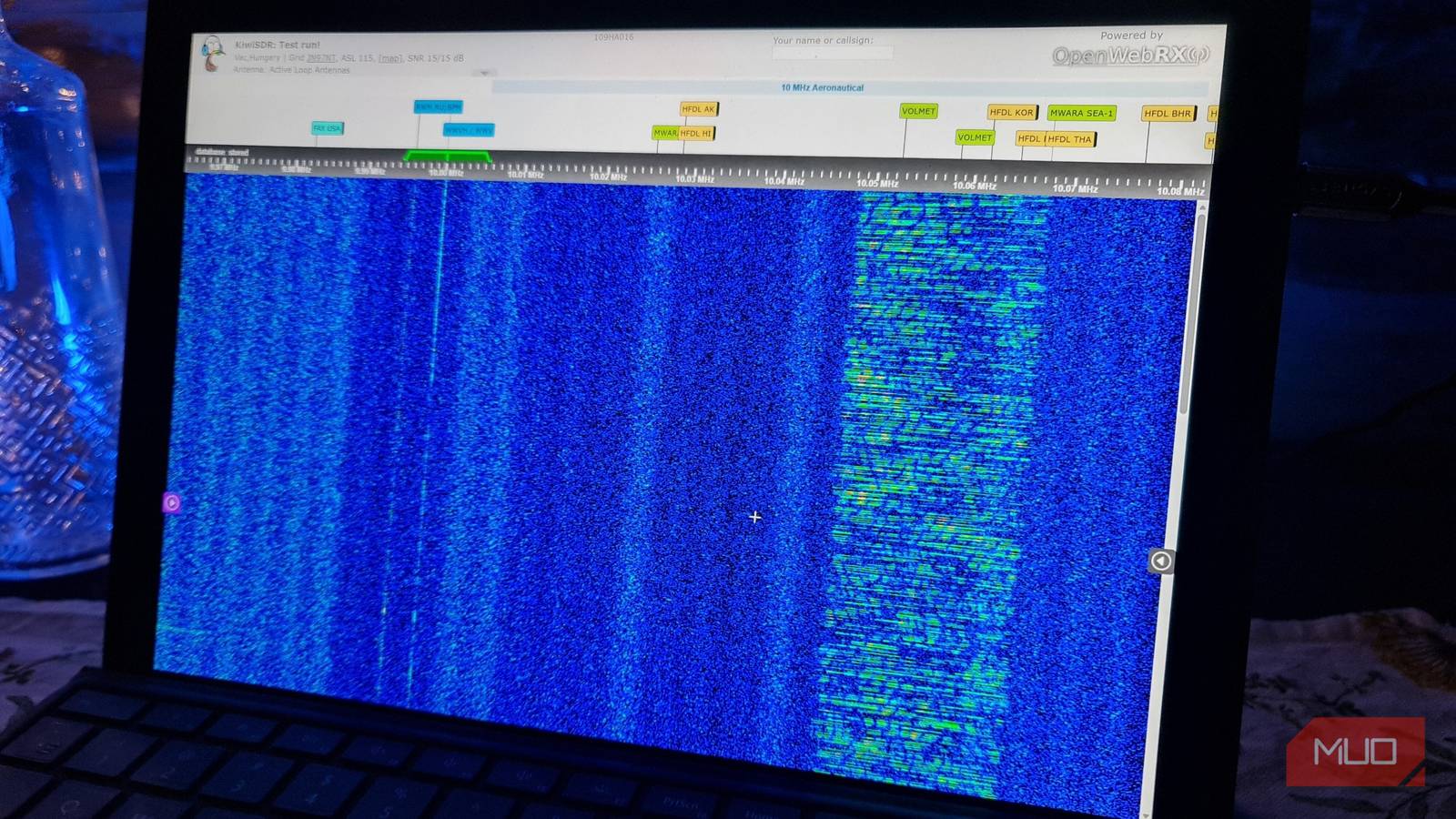
You don’t need a $1,000 transceiver or a ham license. Simply go to rx-tx.info, a map of publicly accessible SDR receivers. Look for KiwiSDR (purple) or WebSDR (blue) stations in regions experiencing nighttime. Click on one, and the interface will show a waterfall spectrogram—a visual representation of signals across a range of frequencies. Use the mouse to tune to known frequencies, set the mode (USB for most voice, AM for time stations), and listen. Many sites also have lists of “interesting frequencies” preloaded. For number stations, consult the Priyom.org database for schedules. Patience is key: some signals appear only at certain hours, and propagation can fade. But the thrill of pulling a signal out of the noise is immense.
The Appeal of the Unexplained
What makes these signals so captivating is that they are real and active. You can hear them right now, not just in recordings from the past. The Buzzer is still buzzing. Number stations still count. The people behind them remain hidden, and the messages remain undecoded for the public. Shortwave radio offers a rare glimpse into a world that operates in parallel to our everyday internet—a world of hidden ears and coded commands. It’s raw, unmediated, and deeply mysterious. That feeling of tuning a dial and stumbling upon a voice from a distant continent, reading numbers that may be part of a spy operation, is something no algorithm can replicate.
Source: MakeUseOf News